
Birds as Spiritual Messengers
A complete guide to bird symbolism in myth, folklore, scripture, and art, and what the birds may be saying to you.

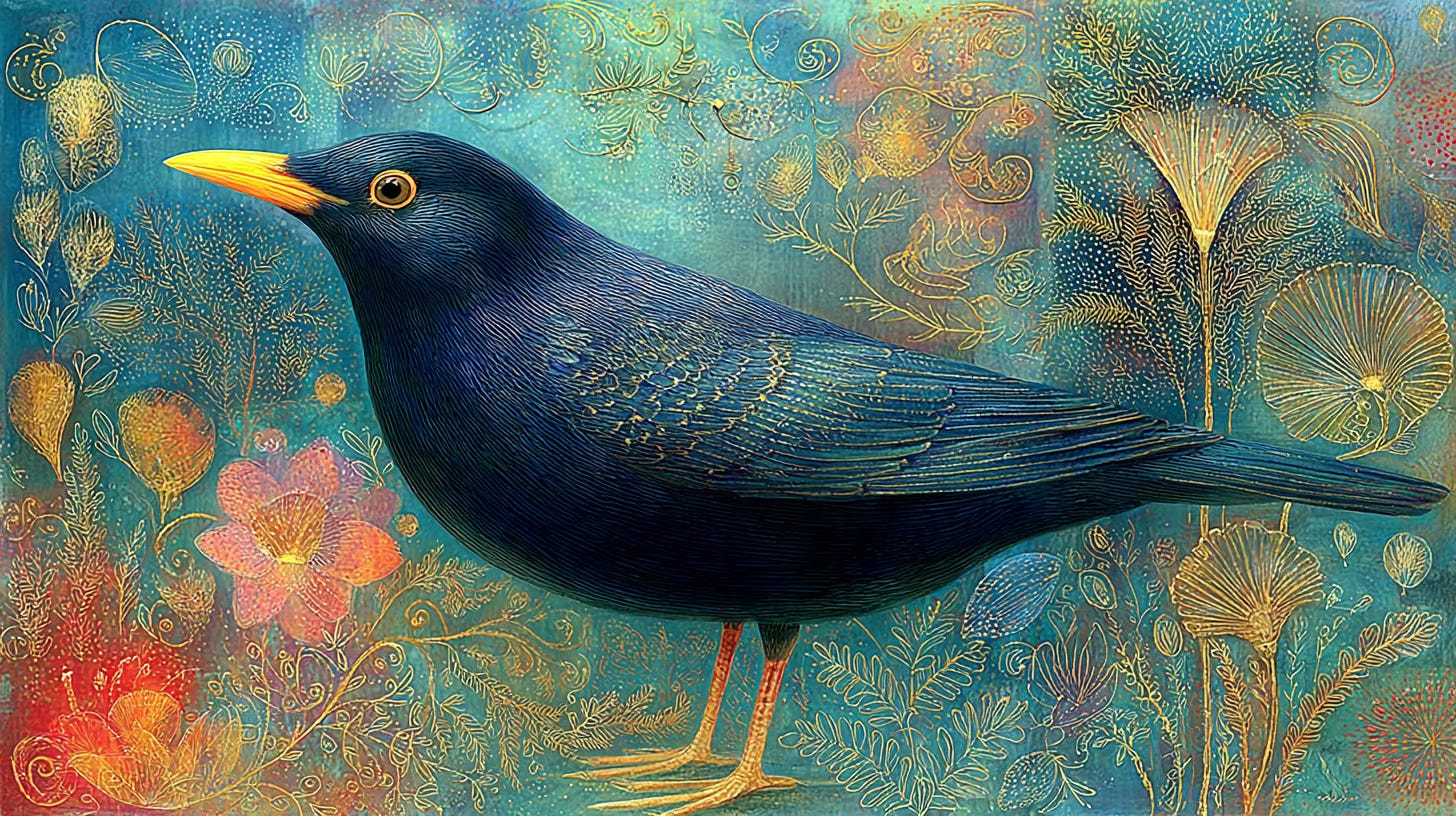
Birds have always meant something to me. As a child, I found an injured blackbird on the doorstep. I nursed it back to health with bread and milk in a cardboard box. Later, I found a dead blackbird caught in the car’s grate. I took it up to my room, wrapped it in tissue paper, and mourned it until my mother came and took it away. After that, I dug graves for any bird I found.
It’s no wonder that when I came to write my Master’s thesis, I chose birds.
Today I live in what feels like a bird sanctuary. Cardinals flash red against the cedar. Mourning doves walk the path as if they own it. Black-crested titmice and Carolina wrens argue in the live oaks. In winter, flocks of cedar waxwings descend without warning. They strip a berry bush bare in an afternoon. And the hummingbirds — black-chinned and ruby-throated — come right up to the window. They look us in the eye as we sit in the living room. If we are very lucky, a painted bunting appears at the feeder. A small, improbable explosion of red and blue and green.
We have a bird bath, a hummingbird feeder, a bird feeder. My husband whistles to them and plays them music, and they listen.
“What are they saying?” we ask. And somehow we know always. They’re saying thank you. We see you. We acknowledge your intelligence. Do you acknowledge ours? =
A bird does not knock. It arrives at the window, or crosses the road just as you look up. It calls from a branch at the exact moment you were asking yourself a question. And in every culture, on every continent, somebody looked up and understood it as a message.
Every culture on earth, independently, decided this. They made birds into creators, omens, guides, gods, and go-betweens. They read the sky the way we read letters.
By the end, I hope you will never see a bird arrive in quite the same way again.
Contents
Birds at the Beginning of the World
Reading the Sky: Divination and Omens
The Owl: The Bird Between Worlds
Messengers and Teachers
The Dove: Love, Peace, and Spirit
Birds in the Mind: Jung
Birds in Literature
Birds in Children’s Stories
Birds in Visual Art
Birds in Music
Birds in Poetry
Birds on Screen
The Eagle on the Standard
What the Birds Are Saying
Birds at the Beginning of the World
Before birds were omens or messengers, they were creators. In some of humanity’s oldest stories, the universe itself begins with a bird.
The Benu and the Phoenix
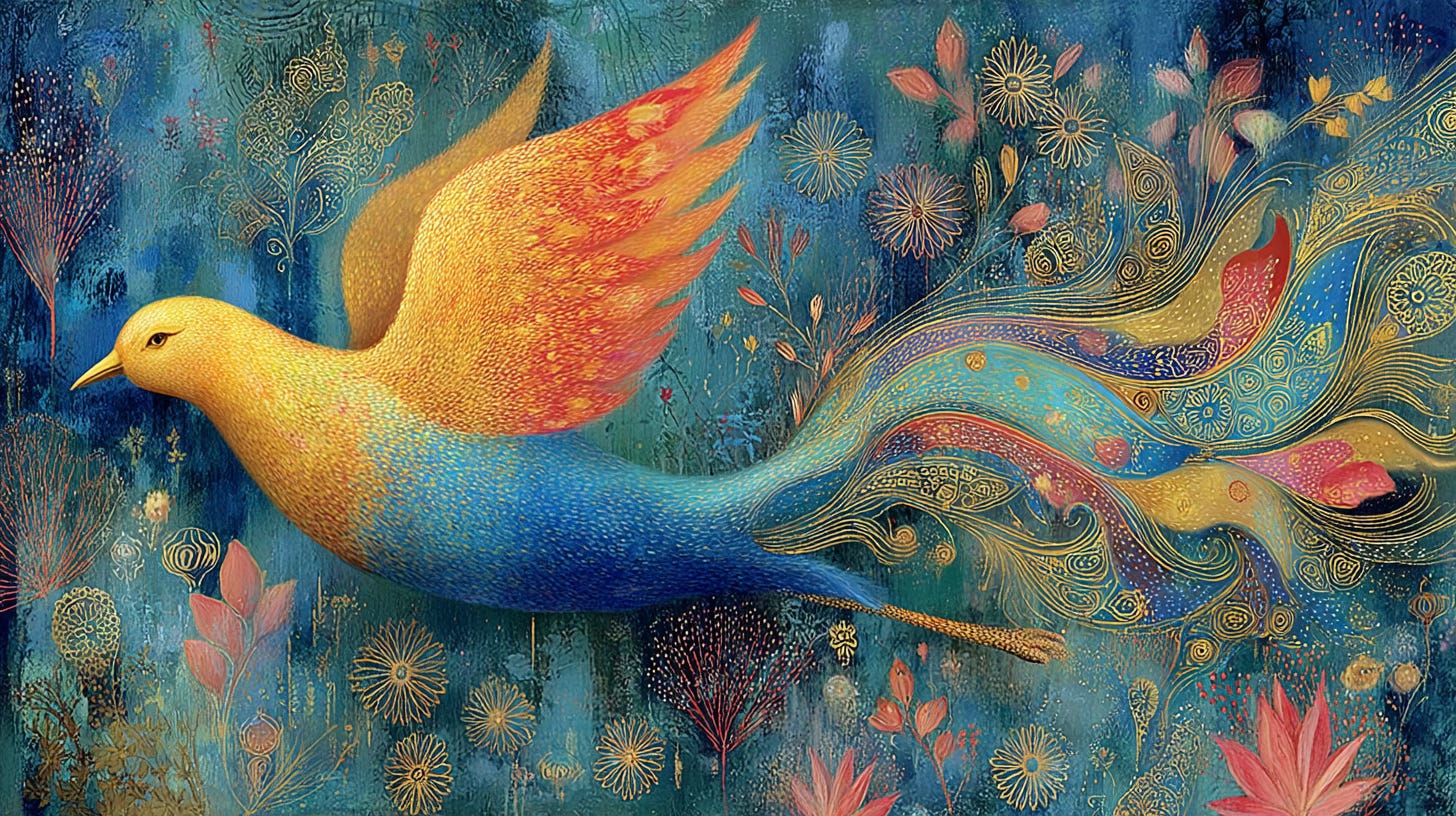
In ancient Egypt, the first being was a bird. The Benu was pictured early on as a wagtail and later as a grey heron. It ymbolised Atum, the sun-god of Heliopolis, and was later called the Ba, the soul made visible, of the sun-god Re. The hieroglyph of its name means “to rise in brilliance,” or simply “to shine.”
What makes the Benu remarkable among gods is that nobody made it. Egyptian funerary papyri describe it as the being “who came into being by himself.” It emerged out of the original darkness before creation. With the appearance of the Benu, existence itself began. In R. T. Rundle Clark’s Myth and Symbol in Ancient Egypt, the Benu is the herald of all things to come. It flys out from the Isle of Fire, the mythical birthplace of the gods. Because it returned from death, the heron also became an aspect of Osiris, god of resurrection. It was linked to the planet Venus, the Crosser, the morning star that announces the dawn. A bird that announces the light: hold onto that image, because humanity never lets it go.
The Greek historian Herodotus visited Heliopolis in the fifth century BC. The priests told him of a sacred bird he knew as the Phoenix. He confessed he had only ever seen it in pictures. An eagle-sized bird, its plumage part red and part gold. It returned to Egypt once every five hundred years. He was told that the young Phoenix carried the body of its dead parent inside an egg of myrrh. It took the egg all the way from Arabia to the temple of the sun and buried it there.
Later tellings gave the story the shape we know now. The Phoenix lives five centuries. Then it builds a nest of fragrant herbs and spices and sets it alight. It dies in the flames, and a new Phoenix rises from the ashes. Rome put the bird on coins as a symbol of the Eternal City’s power to renew itself. Early Christians saw in it the Resurrection. And versions of the same deathless fire-bird appear across the world. The Chinese Fenghuang, the Persian Angha, the Philippine Adarna, the Indian Avalerion, the Garuda, the Finnish Kokko. All tell of the egg, the fire, the endless regeneration.
Jewish legend has its own version. After Adam and Eve ate the forbidden fruit, Adam offered it to all the animals. Only one refused and this was the hoyl bird, which would not touch what God had forbidden. Its reward was a strange immortality. The hoyl never dies; it sleeps, fire consumes it, and from the egg left in the ashes a full-grown hoyl hatches again. Obedience, in this story, is rewarded with the Phoenix’s gift.
IN Russia the Firebird is a magical creature with golden feathers and crystal eyes. In one tale, young Prince Ivan captures the Firebird in a castle garden. He sets it free in exchange for a single magic feather. Thirteen princesses warn him that the castle belongs to an evil magician. But Ivan, in love with one of the princesses, stays to fight. The feather protects him. The Firebird enchants the magician’s demons. Then the bird reveals the egg in which the magician keeps his soul. Ivan breaks it, the magician dies, and the princesses go free. The Firebird is life, protection, and the forces of goodness, and even the villain’s soul lives in an egg.
Ara and Irik and the Cosmic Egg
On Borneo, the Iban people tell of the beginning of time. Two bird spirits, Ara and Irik, floated above an endless expanse of water. Each seized an egg from the water. From one egg Ara made the sky. From the other, Irik made the earth. Then the two spirits shaped bits of earth into the first people, and woke them to life with bird cries. Humanity’s first alarm clock was birdsong.
Indonesia, Polynesia, Finland, and Estonia all tell similar stories. Deities fly down to the primeval ocean to lay the cosmic egg from which the world hatches. Anyone who has watched a chick break out of an egg can feel why this image arose everywhere. Creation is something the bird visibly performs, every spring, in front of us.
Thunderbird
In many Native American traditions, the great forces of the sky belong to the Thunderbird. This is a bird vast enough to carry off a whale. Its wingbeats are thunder and its eyes make the lightning. The Thunderbird protects human beings by fighting evil spirits. Among Algonquian peoples, Thunderbirds are ancestors of the human race itself. They were present at the creation of the universe. In a Shawnee tale they appear as boys who speak backwards. Other nations tell of four Thunderbirds guarding a nest that holds the first egg.
A Lakota story tells how the great Thunderbird saved humanity. The water spirit Unktehi took the new people for lice on the earth’s skin and set out to drown them. The people fled to the highest hill and prayed. The Thunderbird came, hurling lightning until the ground split open. Unktehi and her followers drained away into the cracks. Humankind was saved by a bird.
Raven Brings the Light
On the Northwest Coast, it is Raven, the trickster, who gives us the world we see. Raven finds the hiding place where the Creator has stored the moon, the stars, and daylight. Raven releases them to shine on the world. A story from the Puget Sound region says Raven lived in the spirit land of the birds that existed before our world. Raven grew bored, and flew away carrying a stone in his beak. When he grew tired and dropped it, the stone fell into the ocean and swelled into the land we live on now. Boredom, a stone, and a bird: the recipe for the earth.
Owl, Quetzalcoatl, and the Stork
In the Navajo creation story it is an owl who serves as the bridge of communication between men and women. And from that reconciliation the human race goes on.
In Mesoamerica, one of the most powerful figures was Quetzalcoatl, the Feathered Serpent. It was a magnificent green-plumed quetzal bird. It represented the heavens and wind, fused with the snake of earth and fertility. Quetzalcoatl was a god, hero and legendary ruler. He represented life, motion, laughter, and health. as well as the civilising arts of farming, cooking, and music.
Even our nursery folklore keeps a creator bird. Children across Europe were told that babies are brought by the stork. and storks and herons appear as bringers of life throughout European folk tradition. Easter, and the spring festivals that preceded it, are accompanied by chicks and eggs. They are the most ancient and universal symbols of creation and renewal we have. The old religion of the egg survives, painted and chocolate-coated, in plain sight.
Reading the Sky: Divination and Omens
The formal art of reading bird-flight is called auspicy, literally “bird-watching.” In ancient Rome it was a department of state. The augur was a priest whose entire office was to discover the will of the gods in the behaviour of birds. He would mark out a sacred space of sky, the templum, declare the question at hand, offer sacrifice, and then watch. Which birds came, how many, from which direction, crying or silent. Unfavourable signs could suspend, postpone, or cancel an undertaking entirely, wars included. The historian Livy insisted that Rome only acted after taking the auspices. An empire that ruled the known world checked with the birds first.
The Romans did not invent this. The Hittites, a thousand years before, catalogued more than twenty-seven bird species. They employed a specialist Bird Watcher who observed flight patterns and noting omens. The Roman augur inherited and ritualised this older system. He sat on a hill in a special robe, and traced a region of sky with an unbent divining staff.
Divination by birds, ornithomancy, appears nearly everywhere. The Greeks watched eagles, crows, and vultures. The Celts preferred crows, eagles, and wrens. The ancient Germans, the Tibetans, and the Aztecs all practised it. The Aztecs are said to have chosen the site of their capital, the place that became Mexico City, on the sign of a bird. Julius Caesar consulted white doves about the outcomes of future events. Although he was not above arranging the results in his own favour. Divination has always had its thumb on the scale.
And the practice never really ended. Every British schoolchild still knows the magpie chant: one for sorrow, two for joy, three for a girl, four for a boy, five for silver, six for gold, seven for a secret never to be told. We still take the auspices.
Birds of Ill Omen
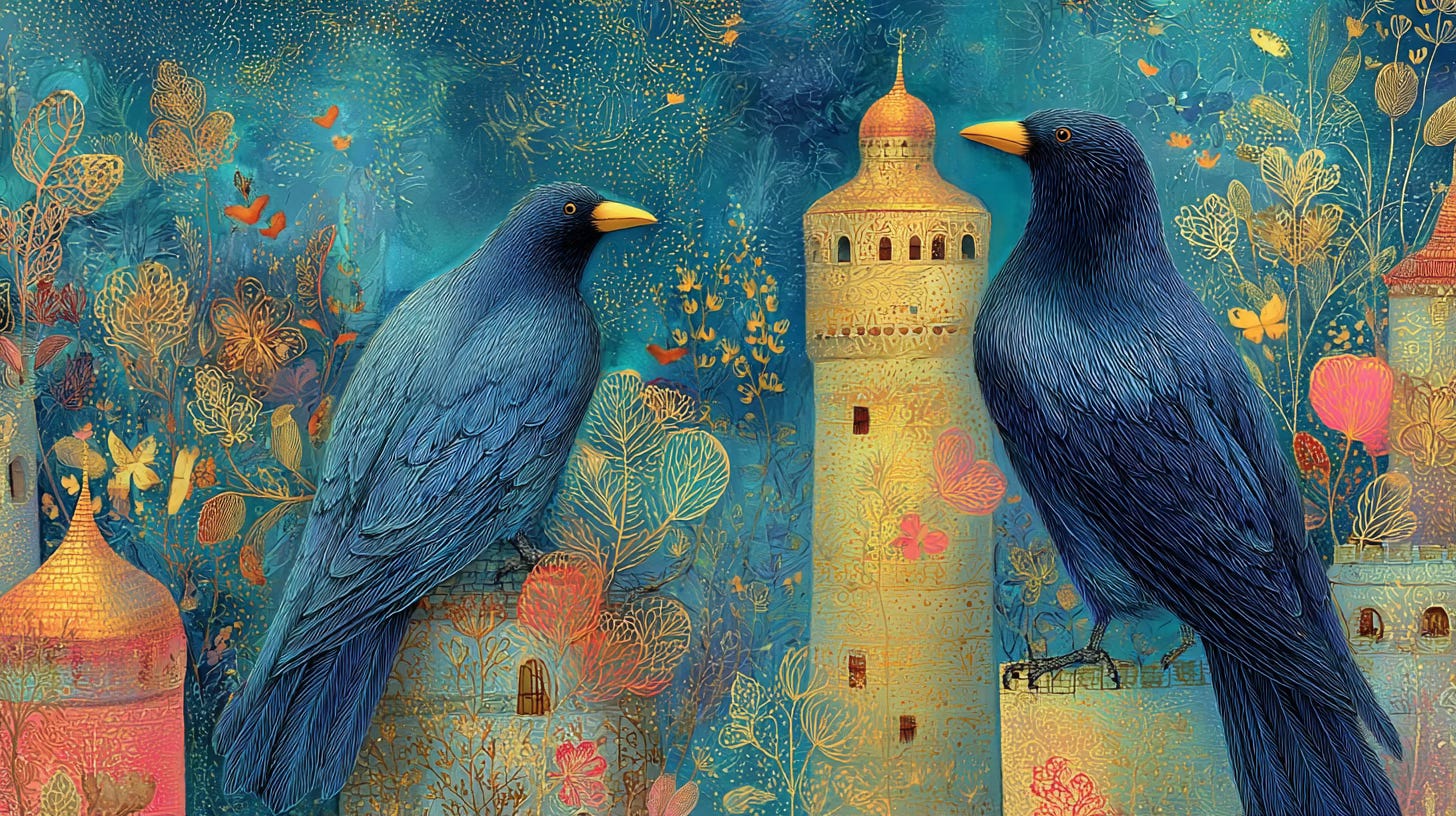
Not all the mail is good news. Across cultures, certain birds became the recognised envoys of death.
Among the South African Khoikhoi people, the hamerkop is believed to see the future in pools of water. When it learns someone is about to die, it flies to that person’s home and gives three cries of warning. The bird is not the cause of the death, only its courier. That distinction runs through omen-lore everywhere.
In European tradition the eagle belonged to death gods such as Beli. In Welsh myth the hero Llew is transformed into an eagle at the moment of his murder. The crow belonged to the death goddesses: to Badb, the archetypal Crone. It also belonged to the Morrígan, goddess of death and battle. The raven, black-feathered, carrion-eating, with that unmistakable croak, became the death-bird above all. A Celtic goddess of battle and strife took the form of a raven, and ravens haunted the battlefields. The Vikings carried the association into war deliberately. The legendary leader Ragnar Lodbrok flew a raven banner called Reafan. It was said to promise victory when it fluttered and defeat when it hung lifeless. King Harald Hardrada carried his own raven banner, Landeythan, the land-waster.
The raven keeps its post in Britain to this day. At the Tower of London, ravens are maintained at government expense. Lgend holds that if the ravens ever leave the Tower, disaster will befall England.
The peacock, for all its beauty, carried the evil eye in its tail-feathers. In parts of Wales it is still considered bad luck to bring a peacock feather into the house.
The Owl: The Bird Between Worlds
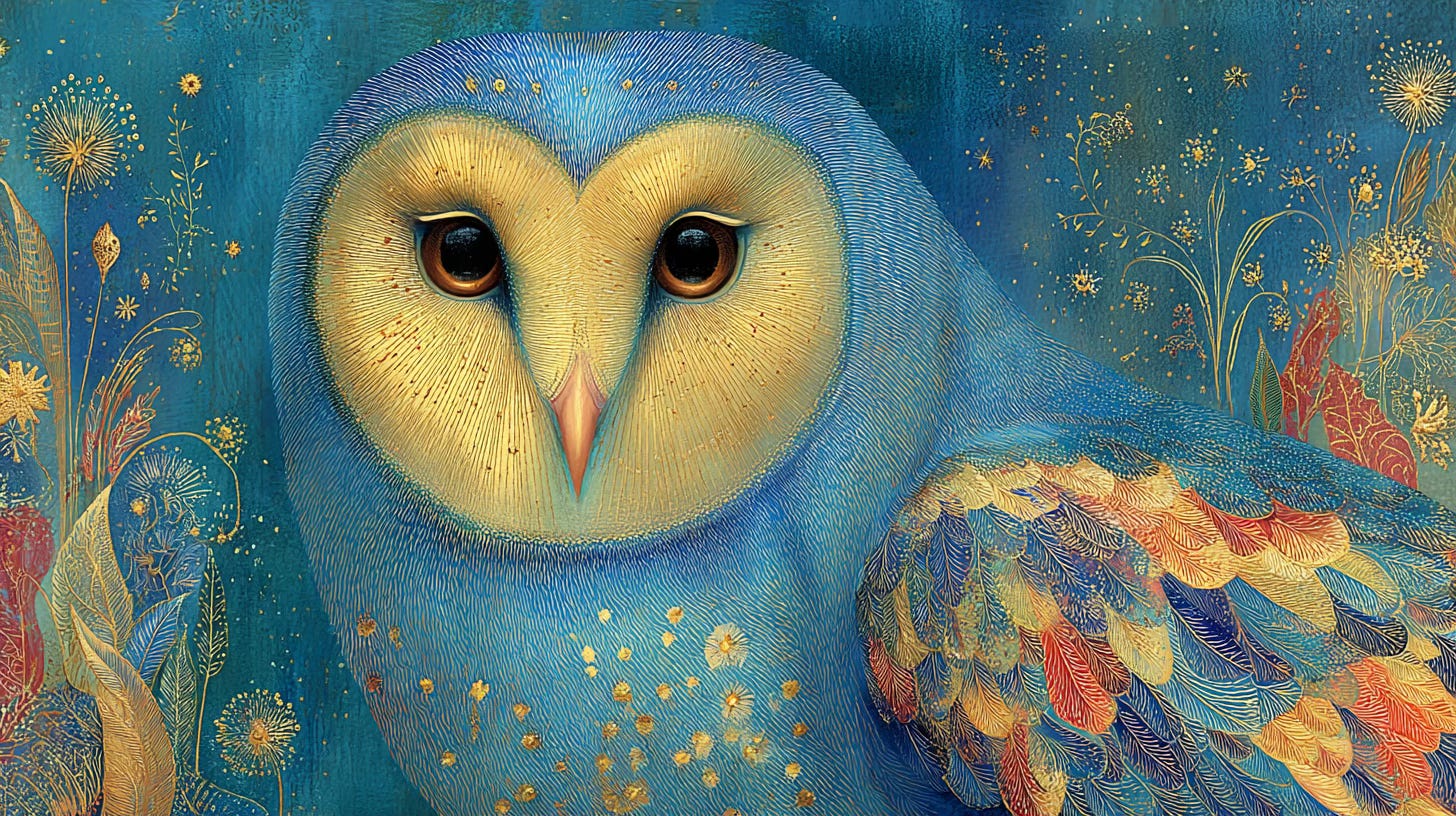
No bird has been read more ways than the owl. It is wisdom and witchcraft, protection and doom, often in the same century, sometimes in the same town. The owl is neither good nor bad. It lives in the shadow country between the worlds. Its meaning depends entirely on who is listening in the dark.
To the Greeks, the owl was wisdom itself. The little owl was the favourite bird of Athene, goddess of wisdom. It was protected, and lived in great numbers on the Acropolis. Its huge eyes were believed to hold a magical inner light that let it see at night. As Athene’s bird it was a protector, accompanying Greek armies to war. An owl flying over the soldiers before battle was read as a promise of victory. The owl even kept watch over Athenian commerce from the reverse of the city’s coins. It still sits on the Greek euro today.
Elsewhere the owl darkened. In China it was a bird of ill-fate. The Khoikhoi heard a death-omen in its hooting. Western tradition gave the owl to the witches as a familiar, making it the totem of adepts and mystics. It was associated with magic and travel beyond the body. The Mescalero Apache believe the owl carries the souls of the recently dead. The Aztecs saw owls as demons, and some Native American legends portray them as malicious. In ancient Rome, an owl nailed to a house door was believed to avert the very evil it had earlier caused. This was a custom that survived in England into the nineteenth century.
Above all, the owl’s call meant death. Owls were said to foretell the deaths of Julius Caesar, Augustus, Commodus Aurelius, and Agrippa. Shakespeare writes of an owl “hooting and shrieking,” before Caeser’s assasination. The soothsayer, Artemidorus, taught that an owl in a dream meant shipwreck or robbery. Roman superstition whispered that witches became owls and drank the blood of babies.
Even the owl’s origin could be a punishment. In the Roman stories Proserpine is carried off to the underworld by Pluto. She might have returned to her mother if she had eaten nothing, but Ascalaphus saw her pick a pomegranate. For his testimony he was turned into a screech owl. The owl, in that story, is what becomes of the witness who reveals the secrets of the dead.
Messengers and Teachers
Celtic myth is full of figures who cross between worlds in bird form. Aife, the Lady of the Lake, and Munanna, both transformed into cranes. Early cultures in Central America saw owls as the sacred messengers of the rain god. In Native American traditions the eagle is the connection to the higher realms. In the Zuni tradition, Eagle simply is the direction Up. Images from the ancient Near East and Iran show the sun itself carried on eagle’s wings.
The old stories agree that birds speak, in tongues strange and inhuman. Understanding them is a mark of the chosen. In Greek myth, a snake licked the ears of Cassandra. Afterwards she could understand what the birds were saying. The gift was rarely comfortable. Bird-speech tends to be prophecy, and prophecy tends to be unwelcome. Apollo punished the birds for telling secrets by turning their feathers black. The crow’s darkness is the price of indiscretion.
And when birds are not prophesying, they are teaching. Aesop’s fables are crowded with bird instructors. The vain jackdaw in his borrowed feathers. The thirsty crow who raises the water in the pitcher one pebble at a time. The crane who puts her head down a wolf’s throat and learns what gratitude is worth. The fables survive because the lessons do.
The Dove: Love, Peace, and Spirit
If the raven is humanity’s dark messenger, the dove is the light one. It may be the most universally loved symbol of all.
In the ancient world the dove stood for fertility. It was beloved of Aphrodite, the Greek goddess of love. In China, doves represent faithfulness in marriage and are used in feng shui to this day. In India the dove represents the soul. And in the West we still release white doves at weddings and print them on anniversary cards.
Scripture sealed the dove’s reputation. When the flood waters covered the earth, Noah sent out a dove to search for land. The first time, it found no place to rest and returned. Seven days later he sent it again. It came back in the evening carrying a olive leaf in its beak, and Noah knew the waters were going down. The dove with the olive branch remains the universal sign of peace, and renewal.
The dove is also scripture’s image of tenderness. In the Song of Solomon, the lovers call one another “my dove”. The beloved hidden in the clefts of the rock, the perfect one, the eyes like doves. And at the baptism of Jesus, Luke and John say plainly that the Spirit of God came down in the form of a dove. When the divine itself needed a body to arrive in, it chose a bird.
The friendship of birds and holiness has a patron saint. Francis of Assisi famously preached to the birds. He told his “little sisters” how much they owe their Creator. who gave them liberty to fly about everywhere, the air for their element, and food without toil. In Francis’s vision the birds are not symbols at all but a congregation.
Birds in the Mind: Jung
Modern psychology inherited the whole aviary. For Carl Jung, birds in dreams represent thoughts. Birds in flight are thoughts moving and changing. To dream of birds, in Jung’s reading, is to express the desire for freedom. The augur on his hill and the analyst with his notebook are practising related arts. Both watch what rises, where it flies, and what it means that it came just now.
Birds in Literature
Shakespeare, in Henry IV, has Hotspur imagines training a starling to speak. He fantasies of the starling saying nothing but the name “Mortimer,” in order to torment the king. In Jessie Kesson’s, The White Bird Passes, the bird carries lost dreams and hope. In E. Nesbit’s The Phoenix and the Carpet, a talking phoenix arrives. The phoenix lifts ordinary children out of their daily lives. It is the old Egyptian fire-bird retired into an English nursery.
The bird as soul’s journey was expressed in Richard Bach’s Jonathan Livingston Seagull. It is the story of a gull who refuses to believe that flying exists only for the finding of food. who pursues flight itself, higher and faster, into something like transcendence. Tolkien’s eagles in The Lord of the Rings are messengers and rescuers. They are powerful forces for good arriving from above at the last possible moment. And in Maya Angelou’s I Know Why the Caged Bird Sings, birds carry the soul’s insistence on joy.
Sometimes the bird carries the question of reality itself. In Carlos Castaneda’s The Teachings of Don Juan: A Yaqui Way of Knowledge, Castaneda flies in the form of a bird. Afterwards, he presses his teacher about whether he “really” flew. If his friends had watched, would they have seen a man in the air? Don Juan’s refusal to give a straight answer is the point. The bird, as ever, stands exactly on the border between the worlds, and will not say which side is real.
Birds in Children’s Stories
Children’s literature prefers to see birds as friendly. Although the old double nature of the bird is never far below the surface.
Edward Lear’s Owl serenades the Pussycat in a beautiful pea-green boat. Owl is a romantic and comforting figure. Enid Blyton put a kindly owl in The Faraway Tree. A. A. Milne gave us Owl of the Hundred Acre Wood. Elderly, long-winded, comically proud of his barely-functional spelling. He is beloved precisely because his wisdom is mostly performance. The benign Dodo bustles through Alice in Wonderland. Animation gave the friendly bird its modern faces. Disney’s Donald Duck, and Warner Bros.’ Tweety and the Road Runner, comic birds with their own streaks of wicked fun. And for a generation of children, the gentlest adult in the world was eight feet tall and yellow. Of course, I am referring to Big Bird of Sesame Street. Big Bird taught me to read so I’ll always have a soft spot for him.
The timeless nursery tales keep birds as moral instructors. The Ugly Duckling, whose suffering is a story about mistaken identity and becoming. Henny Penny, the bird who misreads an omen and panics a whole farmyard. The goose with the golden eggs, the creator bird domesticated into economics. Roald Dahl’s The Magic Finger makes the birds the moral centre that humans must learn to protect. E. Nesbit’s phoenix befriends bored children. And the old ambiguity survives intact in fantasy. In C. S. Lewis’s The Lion, the Witch and the Wardrobe some birds serve Aslan and some serve the Witch. In J. K. Rowling’s Harry Potter books the owls are magical, helpful creatures but carry a flicker of dark. Every child who waits for an owl to bring a letter is dreaming the augur’s dream. The bird arriving with word from the other world.
Birds in Visual Art
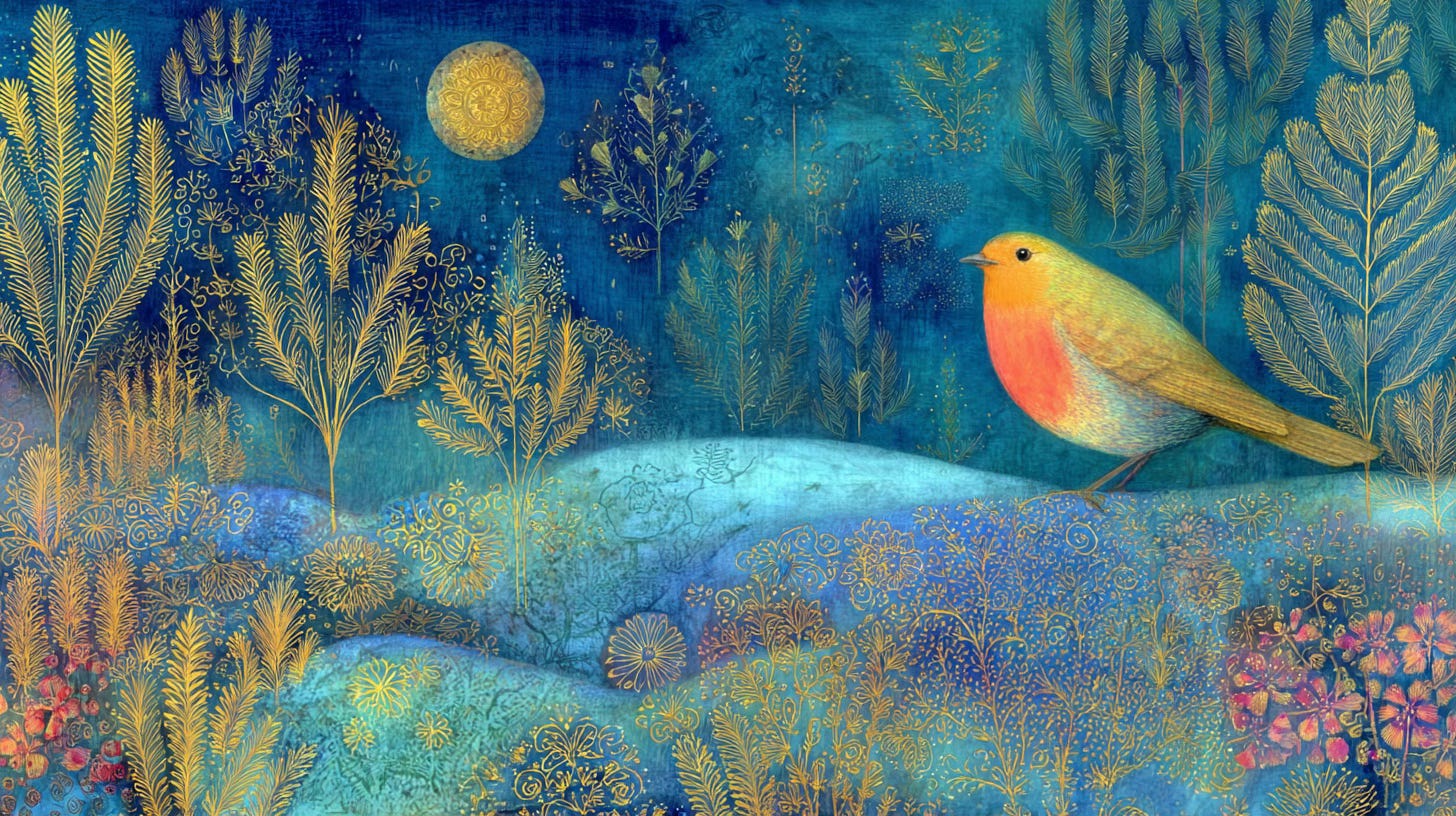
Painters divide along the same old line: bird of light, bird of dark.
Chagall, Picasso, and Matisse painted birds as spiritual and feminine beings. They were emblems of peace and sensuality drifting through their canvases. Renaissance art filled the sky with bird-winged angels and white doves descending. For example, Garofalo’s annunciation angels. On the dark side of the ledger stands Van Gogh’s Wheatfield with Crows. Long said (not quite accurately) to be his final painting, its sky was filled with crows. Dalí gave us a bird stripped to surreal skeleton, devoid of softness or life. The contemporary outsider artist Kelly Moore carries the dark crow and raven forward.
Other traditions made the bird a subject of study or of pure decoration. John James Audubon is America’s most famous bird artist. He catalogued the continent’s species with scientific devotion. William Morris wove birds among flowers and flourishes. The Art Nouveau movement made the bird a signature motif. Neolithic Asian artists gave birds prominent eyes, great crests, and long tails. Later Asian art perfected the elegant crane, all neck and legs. This was an elegance the Celts also exaggerated in their own crane designs. The Victorians adored the robin redbreast, making him the jolly mascot of Christmas. The Victorian “language of birds” assigned a meaning to each species. Our own era prints birds on everything from wedding invitations to home décor. The craft marketplaces of the internet sell bird motifs by the tens of thousands. We have made the messenger ornamental. We have never stopped surrounding ourselves with birds.
Birds in Music
Popular music keeps the bird in its oldest role: the singer of hope.
The Beatles’ “Blackbird” gives a broken-winged bird the moment of its life to arise and fly. It’s quiet anthem of rising above struggle. Paul McCartney linked it to the civil rights movement. Vera Lynn’s wartime “(There’ll Be) Bluebirds Over the White Cliffs of Dover” promised a future of hope after the war. Bob Marley’s “Three Little Birds” puts the reassurance directly into the birds’ beaks. Three of them on the doorstep, singing that everything will be all right. The auspices taken and found favourable. Lynyrd Skynyrd’s “Free Bird” and Steve Miller’s “Fly Like an Eagle” both depict the bird as transcendence. In Oasis’s “Songbird,” birdsong becomes the measure of a woman’s beauty.
The composers heard it too. Mozart famously kept a pet starling that sang his music back to him, and may have borrowed a note or two in return. And Stravinsky turned the Russian Firebird, Prince Ivan and all, into the 1910 ballet. The creator bird of folklore became the creative spark of modern music, which is only fitting.
Birds in Poetry
The poets, on the whole, side with the dark birds. Poetry is where the wilder and more solitary regions of the psyche keep their aviary.
In the Anglo-Saxon poem “The Seafarer,” the cries of gulls replace the laughter of men. The bird is solitude itself. Bede, in his Ecclesiastical History, gives us one of the most haunting bird-images. Acounsellor compares human life to a sparrow flying through a mead-hall on a winter night. In from the dark, briefly through the light, and out into the unknown dark again. Chaucer’s Parliament of Fowls assembles the birds to bicker over love and the ways of the world. Emily Dickinson watches a bird come down the walk and bite an angle-worm in halves, eating the fellow raw. Her bird is nature without sentiment. Elizabeth Bishop’s sandpiper runs obsessively along the shore, a student of the ocean. Baudelaire’s albatross is mocked and crippled on the sailors’ deck. The albatross becomes the emblem of the soul among men. Blair and Wordsworth called the barn owl a bird of doom. Ted Hughes hung his hawk in the rain, holding creation still beneath it. He later built an entire dark gospel around Crow. Seamus Heaney’s blackbird of Glanmore brings life to a house marked by grief. Meanwhile, Paul Farley wrote an elegy for the declining house sparrow.
And presiding over them all, perched on the bust of Pallas, is Poe’s Raven. “Many a flirt and flutter,” a stately bird “of the saintly days of yore.” The raven settles above the chamber door to mock a grieving man with a single word. The omen-bird of the Celtic battlefield, in a nineteenth-century study, still on duty.
Birds on Screen
Cinema inherited the omen tradition almost intact. Hitchcock’s 1963 The Birds needed no monster and no explanation. The horror is precisely that the messengers turn on us. The film works because for ten thousand years we have dreaded birds. Carrion birds circling have always been movie shorthand for approaching death. The counterweight is Birdman of Alcatraz. This is the Hollywood telling of Robert Stroud. He was a murderer who kept three hundred canaries in two adjoining cells for over twenty years. There, the birds are redemption itself, beauty tended in the least likely cage in America.
The Eagle on the Standard
Power has always wanted the bird’s authority for itself. The eagle was the bird of Jupiter, the most powerful of the Roman gods, and the sign of strength and courage. By carrying the eagle on its standards, Rome laid claim to the divine qualities of the bird. Rulers have been making the same claim ever since. The eagle served as the favoured emblem of the Roman Empire. It was seized by the Nazi regime. Today it can be found on the Great Seal of the United States, as well as countless coats of arms and corporate logos. Nations adopt birds the way ancient heroes did: the robin in England, the peacock in India. And modern commerce, has filled our days with bird emblems. We have the little blue bird that taught the world to “tweet” and wings on a Harley-Davidson tank. The augur’s sky has become the advertiser’s.
What the Birds Are Saying
Let’s lay all of this side by side. We have the Benu rising from the darkness before creation. There is the augur counting wings over Rome. Morrígan’s crows on the battlefield, the dove coming back to the ark, and Jung’s flying thoughts. Poe’s Raven, Big Bird, and a pattern emerges that is bigger than any single tradition. These associations run so deep that we barely perceive them anymore. They are archetypes. They permeate nearly every corner of our psychology and our cultural inheritance.
Read in sequence, they trace the journey of the human mind itself. The earliest peoples made birds integral to the creation of the universe. It was a natural leap for anyone who had watched life break visibly out of an egg. Later, the darker regions of the psyche found their reflection in the omen-birds. Humans hreached for the bird’s trans-worldly power, trying to borrow its access. And gradually, the bird’s meaning lightened. It became higher thought, divine communication, hope, the freed soul. The history of bird symbolism is the history of what we have projected. And those projections have been slowly filling with light.
It does not work to keep only the pretty half. The dove and the raven are the same messenger service. It is not by shutting out the darkness that we find the light. It is by understanding and accepting the whole. From there, we choose, knowingly, to reach for the higher aspects of the bird. The liberated soul, freedom, ascension.
And here is where this old research of mine meets the work I do now. Everything in this study describes the same conviction, held by nearly every culture. Birds move between worlds, and their arrivals are information. In my language, birds are one of the most powerful forms of timeline communication we have. They are signal carriers. They arrive at the seams of things, at thresholds and crossings and moments of decision. Our ancestors did not have our vocabulary, so they said omen, messenger, augury. They were describing the same doors.
So the practical inheritance of six thousand years of bird-lore is simple. We can begin using it today. Notice the arrivals. Notice which bird, and when, and what question was alive in you at that moment. When we listen to the birds, we are are practising one of the oldest forms of listening there is. The augurs formalised what every human already feels when a bird lands close by and looks at us. We know that something, from somewhere, is paying attention back.
Sources & Further Reading
R. T. Rundle Clark, Myth and Symbol in Ancient Egypt
Herodotus, The Histories, Book II
Robert and Olivia Temple (trans.), Aesop: The Complete Fables
Bede, The Ecclesiastical History of the English People
C. G. Jung, on dream symbolism
Edgar Allan Poe, “The Raven”
Richard Bach, Jonathan Livingston Seagull
Carlos Castaneda, The Teachings of Don Juan: A Yaqui Way of Knowledge
If you enjoyed this article, you may be drawn to read my book, A Map of Secret Rivers: How to Navigate Timelines. It began as a year and a half of transmissions and became a practical manual for this work.
For those called to deeper work, I also offer Timeline Navigation Coaching.
