
The Soul Knows Its Wings
Butterflies, Consciousness, and the Art of Becoming
So many cultures, throughout history, believed that the butterfly is the soul. Not a metaphor for the soul, nor a decorative symbol of transformation. But the very soul itself.
The ancient Greeks didn’t say the butterfly represented the psyche. They used the same word for both. Psyche (soul, mind, self) was also the butterfly. The butterfly was also Psyche, the goddess, depicted with butterfly wings. When a person died, the soul was shown departing the body as a butterfly. There was no gap between the symbol and the thing symbolised.
The Aztecs believed the souls of fallen warriors returned as butterflies. They hovered around flowers, briefly touching the familiar world before moving on. The Celts believed white butterflies carried the souls of the dead, particularly children. They saw killing one as a grave offence. In Japan, a butterfly in the home was a visiting ancestor. In China, Zhuangzi dreamed he was a butterfly. He woke to wonder which was the dream, the man or the butterfly.
And in the Christian folk tradition, the metamorphosis became the image of resurrection.
So many separate minds, in so many separate centuries, pointing at the same idea.
What the Caterpillar Knows
Inside the chrysalis, the caterpillar does not simply rearrange itself. It largely dissolves. The caterpillar breaks down into what biologists describe as an imaginal soup. It is a liquid state in which almost none of the original structures remain. What reassembles is not a modified caterpillar. It is an entirely different architecture.
And, yet, certain memories persist across the transformation. Caterpillars trained to avoid a particular smell retain that aversion as adult butterflies. Something survives the dissolution. Something carries through.
Our ancestors looked at the butterfly and understood that this was more than change. It was change that passes through what looks like annihilation.
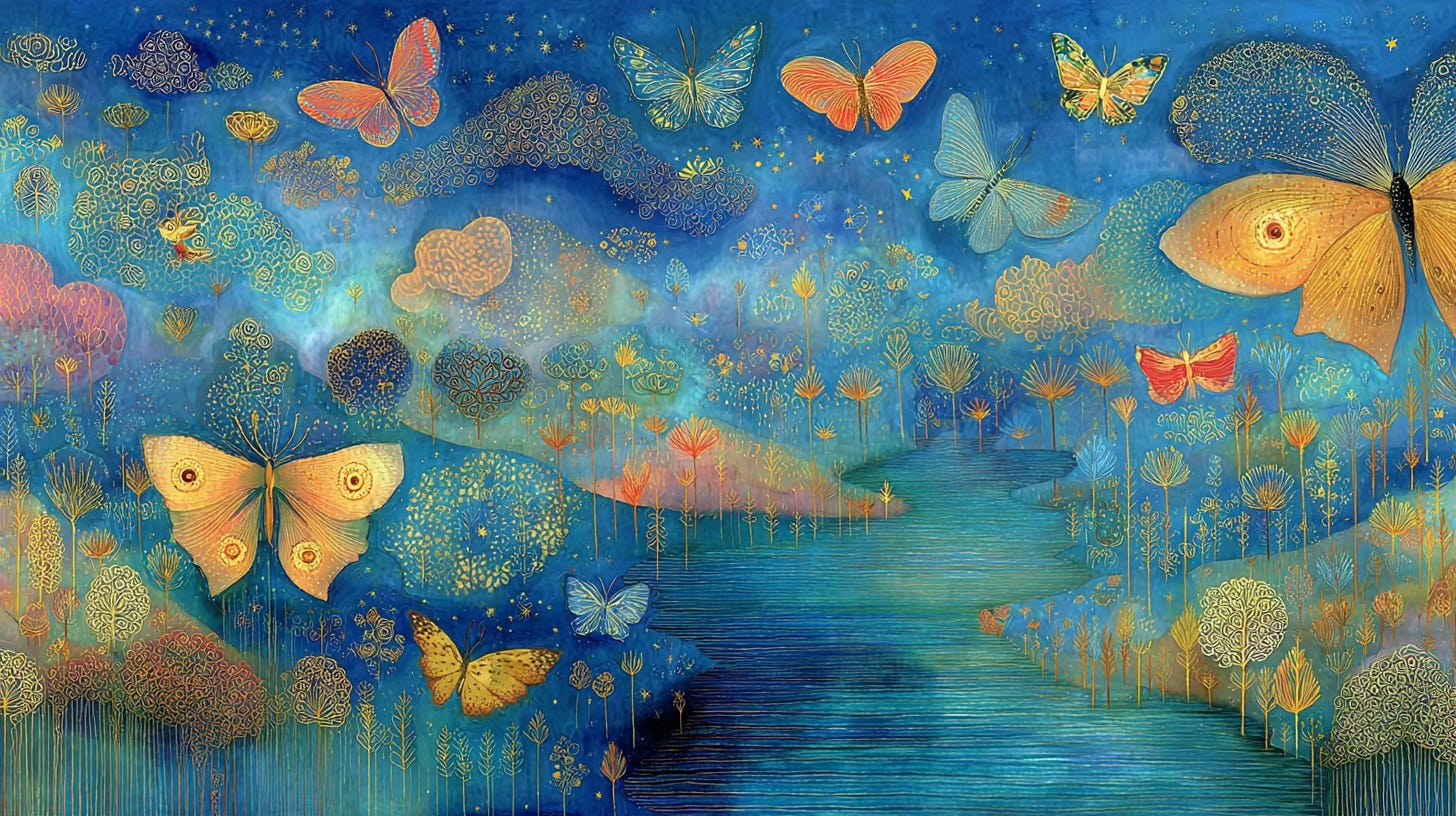
The Observer and the Wing
A particle in superposition exists in multiple possible states simultaneously. It collapses into a single definite state only when measured. Before observation, the wave function contains all possibilities at once. The very act of looking selects one reality from an ensemble of realities.
This is how matter behaves at its most fundamental level. It has been verified in experiment after experiment.
Max Planck found the primacy of consciousness obvious. In his view, consciousness was not a product of matter. Matter was a construct of consciousness. Everything we call the physical world was the effect of an observing mind.
He was not alone among the founders of quantum mechanics in this view. Erwin Schrödinger wrote at length about consciousness as a singular, unified field. Indian Vedantic philosophy been saying something very similar for three thousand years.
Werner Heisenberg spoke of quantum events as existing in potentia. A mode of possibility rather than actuality. The moment of observation brought them into the actual.
Potentia. Possibility space. The caterpillar in the chrysalis, neither what it was nor yet what it will be.
The butterfly emerges from the fixed form dissolved. It is an almost perfect physical enactment of what these physicists were describing. Consciousness collapses possibility into actuality.
The Space Between What Was and What Could Be
Vadim Zeland is a Russian quantum physicist. He published his Reality Transurfing series in the early 2000s. . His central proposition is simple and strange: reality is not singular. The world branches into an infinite space of possible variations. Our role is not to observe a fixed reality but to navigate toward the variation we choose.
He calls this the alternatives space. This is a field of all possible versions of events, all coexisting. Our experience of a single timeline is not because only one exists. It is because our attention and our energy select, moment by moment, which variation we move into. The soul does not passively receive reality. The soul transurfs it. It slides across the surface of possibility, steering by the quality of its attention.
The caterpillar does not decide, by effort and strategy, to become a butterfly. It enters a state of dissolution. The old form releases its grip on what it believes itself to be. The imaginal cells that will build the butterfly are present from the beginning. They do not arrive from outside. They activate. They recognise one another. They build the new form from within.
Timeline Jumping is not always a dramatic leap between worlds but a reorientation. It is a quiet pivot of attention toward a variant that already exists. The difficulty is not in reaching the better timeline. The difficulty is in releasing the old one. The caterpillar must dissolve to become the butterfly.
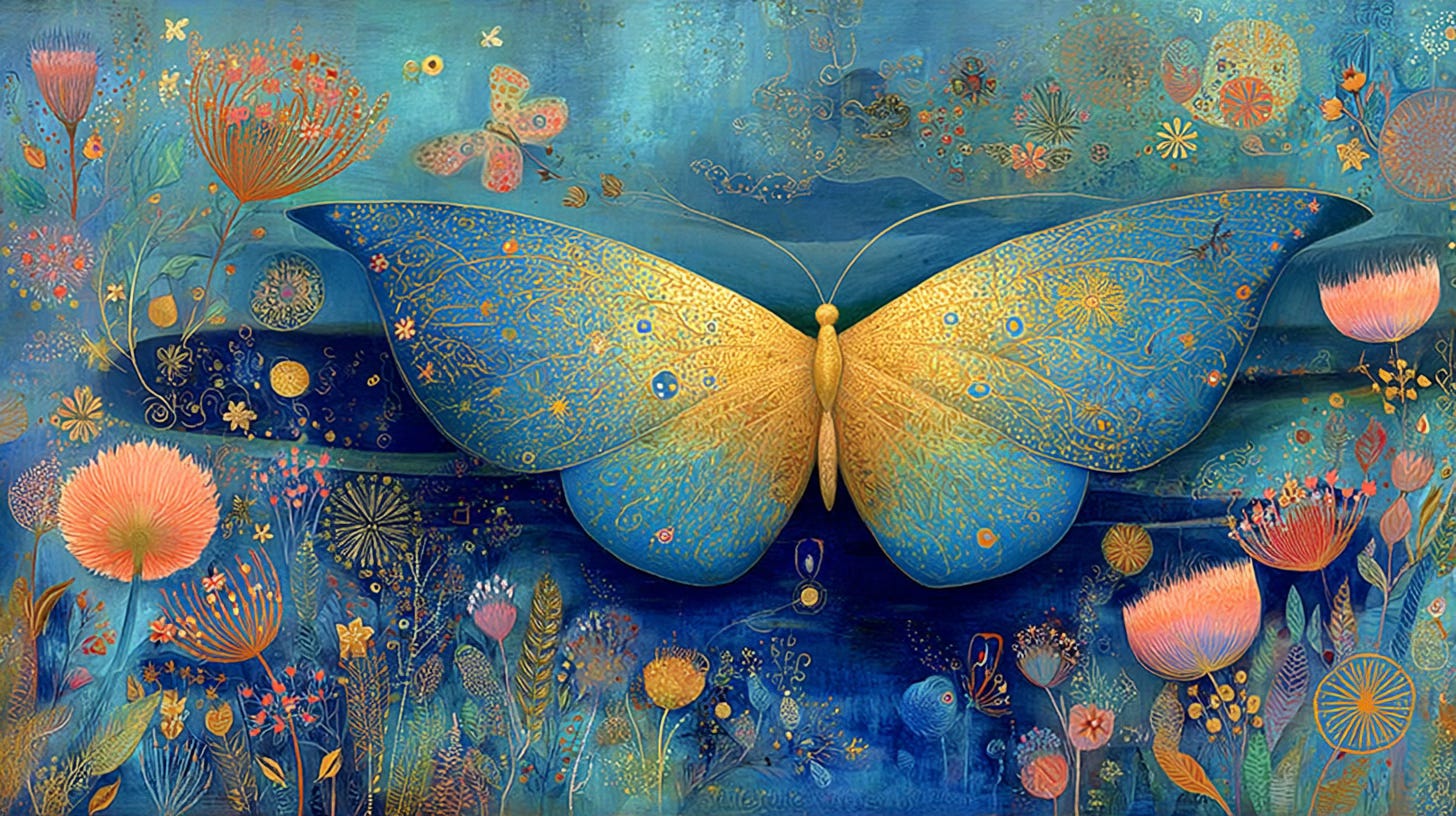
Consciousness as Ground, Not Output
Consciousness in mainstream thought for the last century has been eliminative materialism. It is sometimes dressed in the softer language of emergence. Consciousness is what brains do. Neurons fire, complex patterns arise. At some threshold of complexity, the lights come on. The mind is the final output of matter working itself into sufficient intricacy.
This model has the advantage of tidiness. It keeps consciousness in its place.
It also has a problem. The problem is called the hard problem of consciousness. It was named by the philosopher David Chalmers in 1995. But it had been felt for centuries before he gave it a name. We could map every neuron experiencing the colour red, but that is only the physical process. We would not have explained why there is something it is like to see red. Why the redness is there at all, experienced from the inside.
No amount of third-person physical description closes this gap. The gap is not a temporary ignorance awaiting a better brain scan. It is a category difference between objective description and subjective experience. Planck and Schrödinger were pointing at something real. The physical world is an expression of consciousness rather than its cause.
The observer selects from possibility space. The reality that seems fixed is always, at its quantum substrate, a field of potentia. The metamorphosis is not a miracle that happens to a caterpillar. It is the latent truth of all becoming, enacted at a scale large enough to see.
What Keeps the Wings Folded
Our habitual thought structures keep us oriented toward the present variation of reality.
The mystics called it attachment. The Zen tradition called it clinging. Psychotherapy calls it the repetition compulsion. Quantum mechanics might see it as the observance of what is already manifest. In other words, seeing is believing, and believing is seeing.
In the Celtic tradition, you did not merely observe the butterfly. You did not grab it. You watched where it went. It was a messenger. It pointed toward something. The butterfly did not stay. It was always about to become elsewhere.
In Zhuangzi’s dream, the crucial moment is not the butterfly itself but the waking. It was the instantaneous forgetting of which state is more real. The man who was a man a moment ago is now uncertain. The boundary has become permeable. And Zhuangzi, rather than resolving the uncertainty, celebrates it. The question is the point. The permeability is the teaching.
When we are entirely certain of what reality we inhabit, we have stopped transurfing. We have believed ourselves into a fixed state. The wave function has collapsed completely.
But the butterfly flies on wings it never had before. It visits flowers it never visited as a caterpillar. It navigates by magnetic fields and star patterns unknown to the caterpillar it once was.
A Closing Thought About the Imaginal Cells
The word imaginal in imaginal cells comes from imago. It is the scientific term for the adult butterfly. But it is also the root of imagination.
The cells that survive the caterpillar’s dissolution are oriented toward a future form.
They are also, initially, attacked by the caterpillar’s immune system. The body that is dissolving treats the cells of its own becoming as foreign invaders.
Every one of us who has tried to change will recognise this. The old system fights the new. The familiar throught structures resist dissolution. The dissolution feels like destruction because it is destruction.
And still, the imaginal cells prevail. The chrysalis opens. What was always encoded within the buttefly emerges into the light.
If this piece resonated, my book, A Map of Secret Rivers: How to Navigate Timelines, covers many of these ideas as a lived practice.
If you are ready for deep transformation, I offer one-on-one Timeline Navigation Coaching.
