
If You Want to Be Free, Stop Doing This One Thing
Why I stopped consuming the news — and what happened when I did.

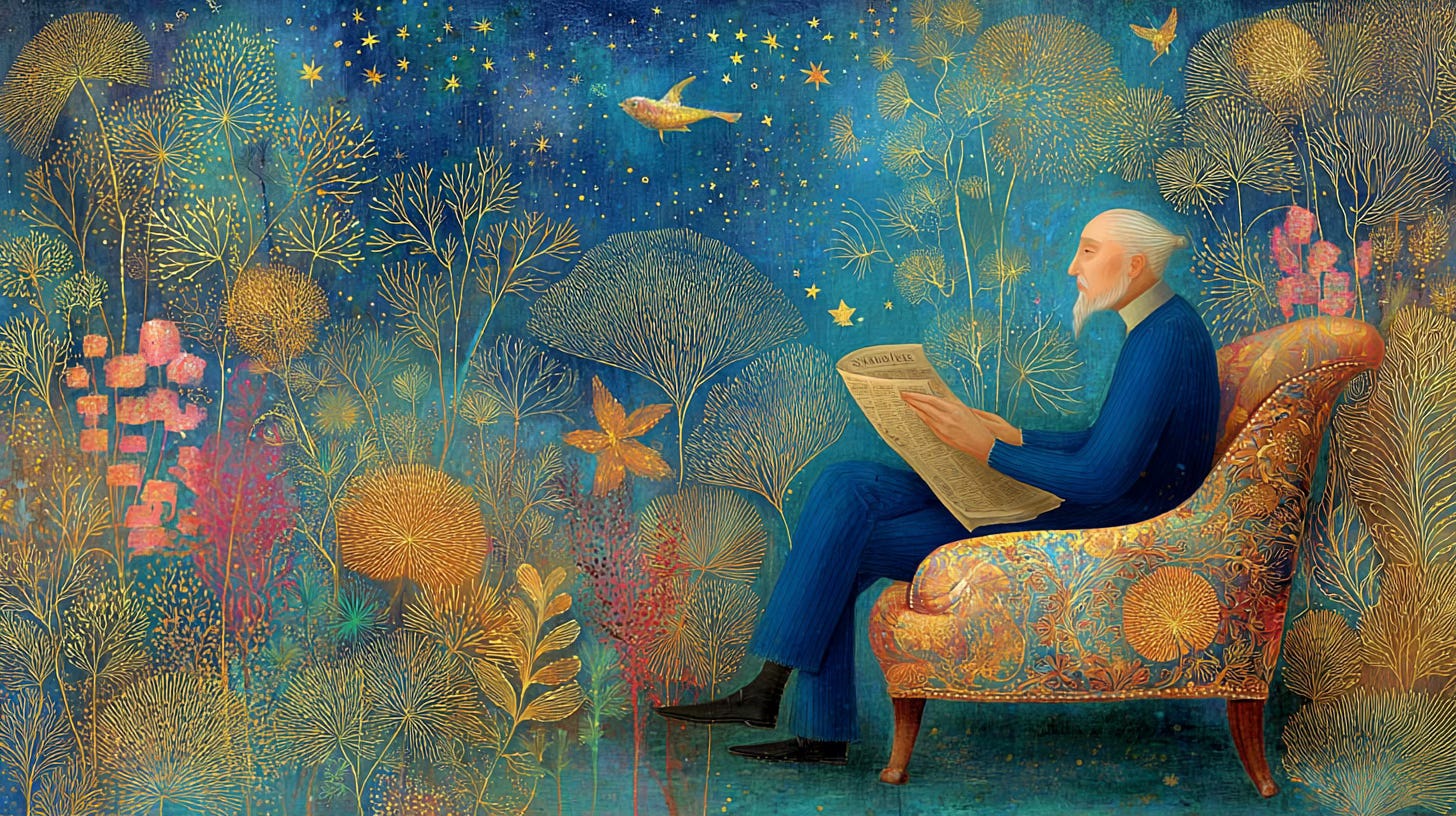
Do you read - or watch - the news every day?
For years, I was a news addict. Most people are.
But I’ve stopped listening to and reading mass media altogether. I haven’t paid attention to politics for several years now.
You might think this makes me ignorant or poorly informed, but the last few years have been more productive and educational for me than ever.
I’ve been reading classic philosophers and esoteric texts, studying digital marketing, and writing thousands of words. Setting up my businesses, playing my classical guitar, researching, meditating, walking, and growing.
I smile and feel peaceful every single day. I am barely aware of the events everyone else frets about.
If this is what it feels like to be poorly informed, I’m fine with it. I’ll take it any day over getting outraged and upset by things outside of my control.
Now and then, I ask my husband what’s going on in the world.
“Is there anything I need to know?” I ask him.
He smiles and says, “Not really.”
About once a month, I glance at the headlines, to confirm what he’s told me. I never have the urge to read further.
It’s doom and gloom, or absurd, or superficial. Most of it seems like lies. Nothing fundamental changes.
I recommend my way of being to you. I’ll explain why.
The negative cult
“News is a series of apparently absurd stories that all end up looking the same, endless parades of poverty-stricken countries, sequences of events that, having appeared with no explanation, will disappear with no solution — Zaire today, Bosnia yesterday, the Congo tomorrow.” -Pierre Bordieu
Western culture has become a cult of negative thinking. The news keeps us hypnotized with a pervasive, pessimistic message.
Never before in human history have we been bombarded with so many ominous stories. We watch the misery on a multitude of devices and platforms — in high-definition, readily available at the touch of a button, anywhere we are.
In an article published by WPR, Mary McNaughton-Cassill discusses the stressful effects of the media. The negative information we’re fed 24/7, makes us believe the world is more dangerous than it is.
Scientists refer to this as ‘the mean world syndrome.’ The American Psychological Association found that many Americans are stressed by the news. It causes them anxiety, fatigue, and sleep deprivation.
As miserable as it makes us, we are mesmerized. We can’t look away. This negativity diminishes us. It downgrades the quality of our lives.
Our minds are enslaved. It’s a tsunami of misery washing through our psyches.
Vigilant monkeys
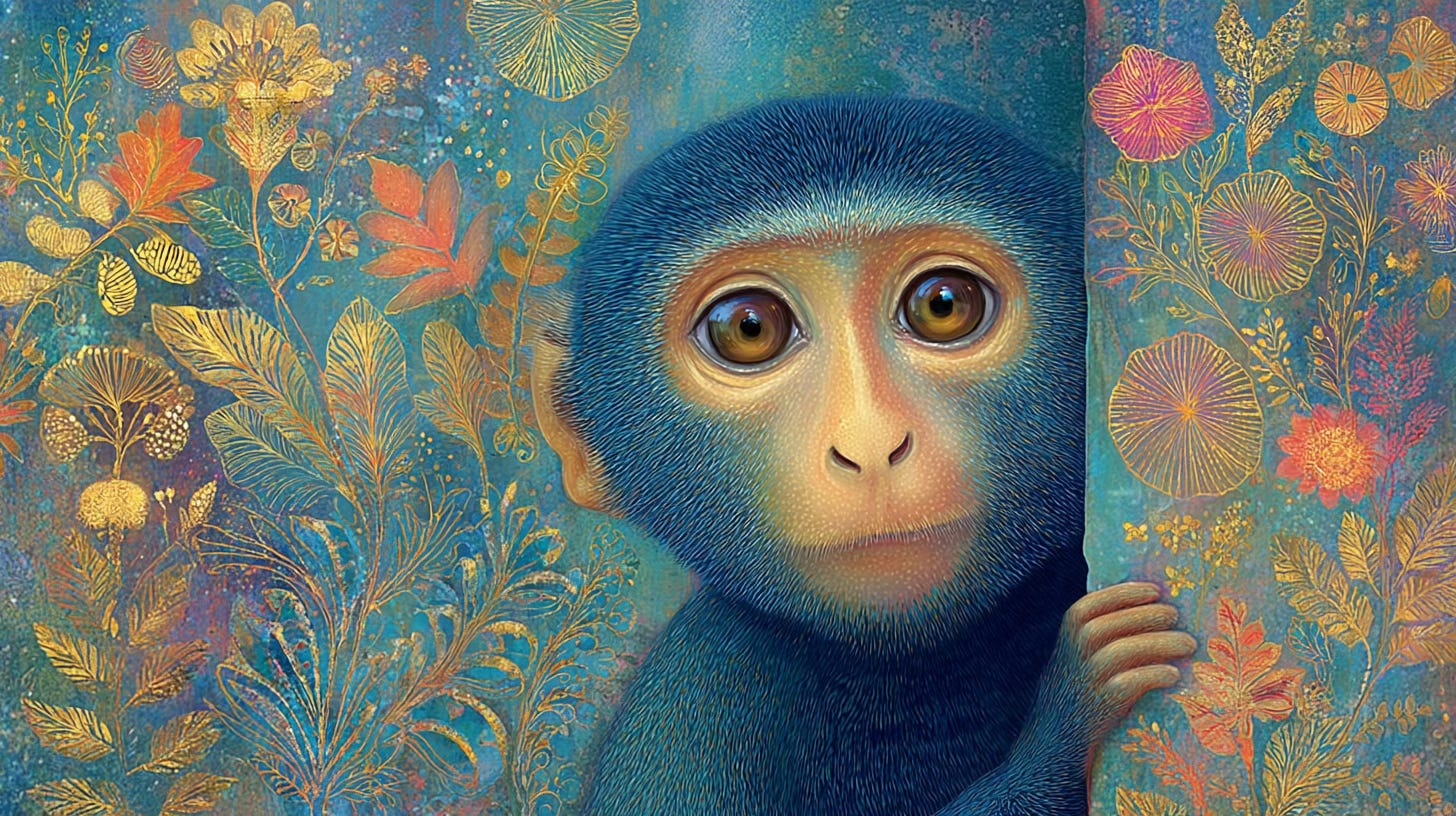
If you observe many species of monkeys, there are a few ‘sentinel monkeys.’ These sit on the outskirts of the monkey circle. They are ready to screech like crazy should a predator show up.
Lots of animals and birds have similar systems. It pays, if you’re a monkey, to listen to the sentinel monkeys — it could save your life.
Likewise, we are attuned to the news. We are predisposed to listening to warning cries because our primary instinct is survival.
Unfortunately, we have taken things too far. When we spend too much time consuming the news, it’s as though we’re listening non-stop to crazy sentinel monkeys.
Our town criers are working 24–7 and they’ve gone haywire. They’re brainwashing us.
We dare not look away in case we miss an important warning. It triggers the hyper-vigilant part of our minds. This, coupled with dopamine-fuelled novelty seeking behaviour, is why the news is so addictive.
‘They’
“The way that news is presented and the way that we access news has changed significantly over the last 15 to 20 years. These changes have often been detrimental to general mental health.” — Graham Davey, professor emeritus of psychology at Sussex University in the UK and editor-in-chief of the Journal of Experimental Psychopathology.
The trouble is, there are dark forces behind our media whose aim is to keep us powerless and dependant. ‘They’ want to keep us in a state of fear because when we are helpless, we’ll be more compliant workers and consumers.
You have to understand: to these powers, we are nothing more than economic units.
On an energetic level, ‘they’ feed on our negative emotions. They keep us divorced from our natural state of alignment with truth and peace.
If you listen to the public conversation, you’d believe we were living through one of the worst times in history.
In his books — The Better Angels of Our Nature and Enlightenment Now: The Case for Reason, Science, Humanism, and Progress — cognitive scientist Steven Pinker explains that life is better now than it has ever been.
He argues that our pessimistic culture has disavowed positivity. His data proves that there is a worldwide decline in crime and poverty.
Why our culture has decided to allow this unnecessary descent into mental misery is beyond the scope of this article.
Imaginary misery
I do have one theory. We are conditioned for hardship. Throughout most of our evolution, mere physical survival has been our primary goal.
Now that most of us don’t have to focus on keeping our soul and body united, there is a void inside us. We are used to that struggle. So we fill it with imaginary misery.
That’s what the news is. It may be real to the people it’s actually happening to. But it’s not real to us, the consumers. Therefore, for most of us, most of the time, the news is imaginary.
Going forward
My intention is to implore you, dear reader, not to fall prey to the plague of negativity sweeping the West.
You are better than that. You have more to give, to do, to be, to create than to be part of the hysteria. It’s drama, theatrics. Imaginary strife. It’s divisive and harmful.
When you let go of things you can’t control, you’ll be liberated.
Please — I beg you — turn your attention to positivity. There are so many good reasons to do so. Work on your own projects and development. Keep your energy for the people you love. Ignore the rest.
Wake up. Attune yourself to all that is good and right and wholesome.
Allow yourself to be your full vibrant, creative, intelligent self.
You’ll be happier, healthier, and — most importantly -free.
Thank you for reading. I wish you everything.
If you enjoyed this article, you may be drawn to read my book, A Map of Secret Rivers: How to Navigate Timelines. It began as a year and a half of transmissions and became a practical manual for this work.
For those called to deeper work, I also offer Timeline Navigation Coaching.
Birds as Spiritual Messengers

Birds have always meant something to me. As a child, I found an injured blackbird on the doorstep. I nursed it back to health with bread and milk in a cardboard box. Later, I found a dead blackbird caught in the car’s grate. I took it up to my room, wrapped it in tissue paper, and mourned it until my mother came and took it away. After that, I dug grave…
Thank you for this.